

The future of aging

What does it look and feel like to live in a society that appreciates getting older?


AGE WITH AGENCY: BUILDING A PRO-AGING CONSUMER PRODUCT ECOSYSTEM BY 2050
Field observation of aging-related products
Field observation of mobility product
Field observation of a walking aid
BOLD.
The world is not built for old people.So I built it.

From a foundation of design futures research, foresight, and speculative design, I designed a set of future scenarios and conceptual solutions for an ageing population in 2050 where older people are empowered with the agency to define their own identity and wellbeing without shame or stigma. They are perceived as valued members of society, and actively contribute to building the world around them.

Current societal attitudes towards ageing – and by extension, prioritizing the development of products that are needed as we age – have been stuck on the same market spectrum of apathy and disdain for the past 30+ years. My future world envisions what 2050 might look and feel like if obstacles no longer existed. It centers on a speculative consumer brand called BOLD, that focuses on products and environments inclusive of older people’s needs across four lifestyle domains: home, work, play, and life.

I am interested in the day-to-day experiences of people as they reach their 60s and above. This endeavor is motivated by the desire to shape the future I want for myself, my loved ones, and generations of people that come before and after me as we all get older. With this foundation of strategic and actionable research, my goal is to build pathways that enable all of us to lead fun, joyful, creative, meaningful, active, and connected lives that reflect our identities beyond just our age bracket.

Originally presented at RCA2026MDes Design FuturesRoyal College of Art (London, UK)10058281@network.rca.ac.uk
02 / 2050 Preferable Future

BOLD.

BOLD is a speculative consumer ecosystem for aging with agency. Four scenarios show how its products, environments, and culture reshape Home, Work, Play, and Life.

Home

Aging in place as a lifestyle

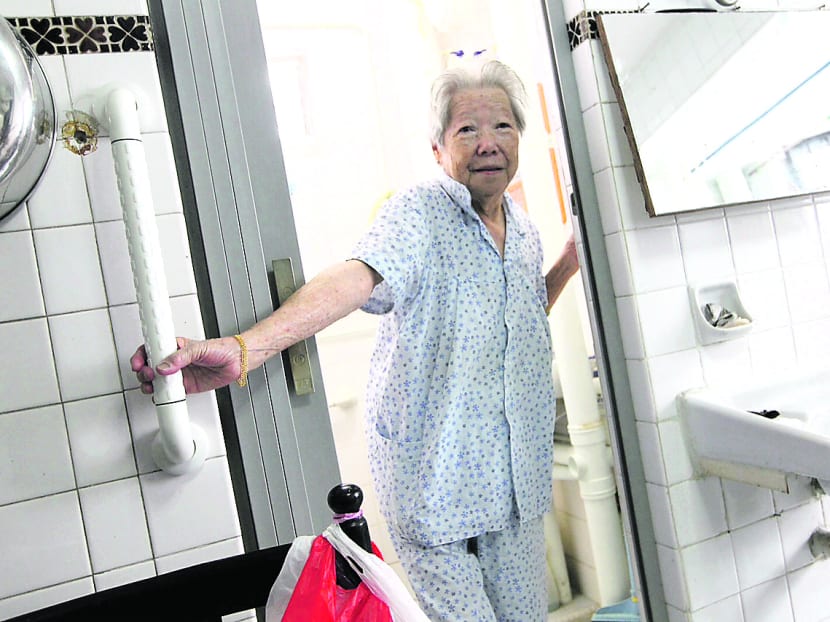
Almost everyone wants to grow old in their own home. But the things that would allow this are ugly and sold like medical equipment. Need and desire are not the problem. Stigma and supply of options are.

In 2050, these products are simply good design: accessible, functional, desirable, and personalized to who you are. They exist like anything else you choose to own.

What if products needed as we age fit our vision of how we see ourselves?

  • BOLD AT HOMEHandrail wall selection featured in a showroom setting.
  • Design languageDifferent materials and finishes to fit into your current home decor.
BOLD At Home showroom concept
Work

Building for ourselves

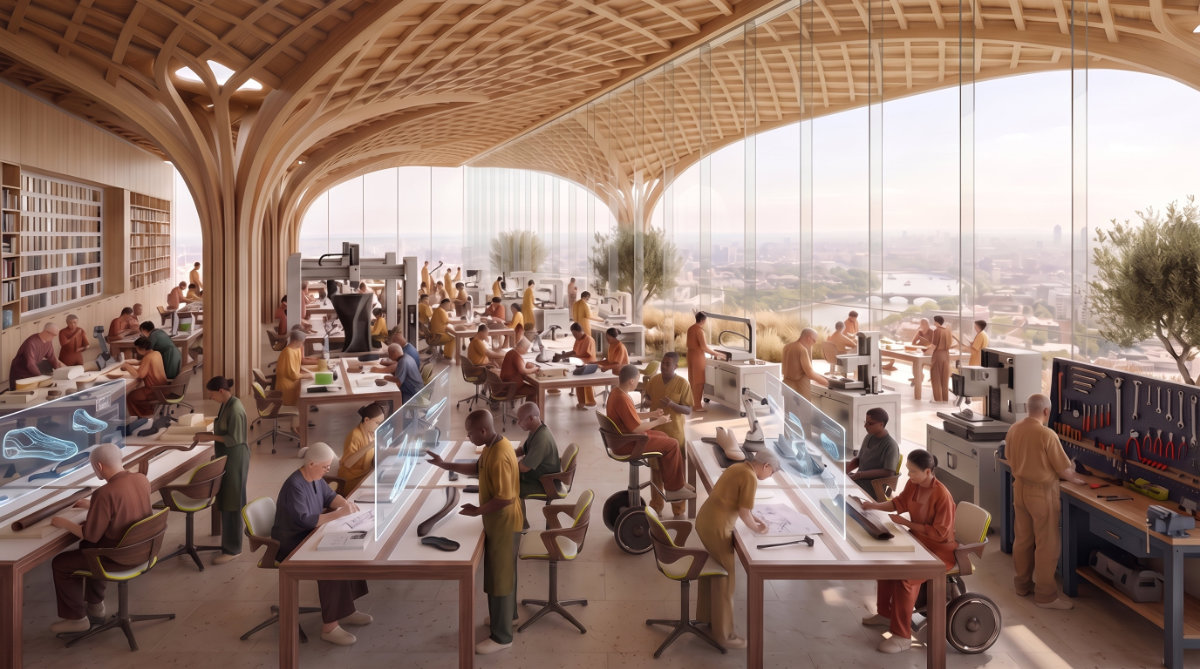
Like “lifespan” and “healthspan,” Future of Work debates need to address “workspan.” In 2050, users are also in the room where the things they want are made.

What if older designers, engineers, and marketers could be involved in making age-inclusive products along the entire value chain?
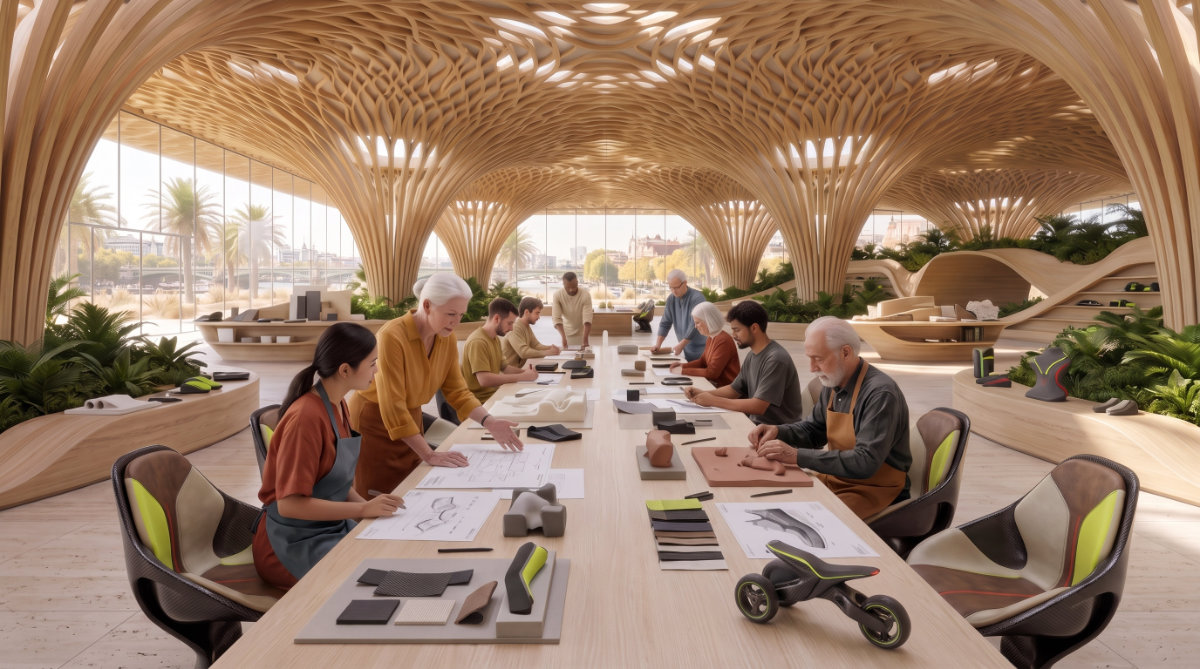
  • BOLD AT WORKOffices designed for the needs of older employees, including ergonomic seating, suitable table heights and clearance, and bright but diffused natural lighting.
  • CultureIntergenerational teams and workspaces. Continued learning opportunities regardless of age.
BOLD At Work collaborative studio BOLD At Work intergenerational workspace
Play

The lifelong pursuit of fun, joy, and creativity

Adults are told to be productive, and that play is for children. But continuing to develop a practice of play can act as an antidote to loneliness, and help people feel connected, engaged, and a sense of belonging to stay with us for life.

What if we had infrastructure for structured play throughout our lifespan?
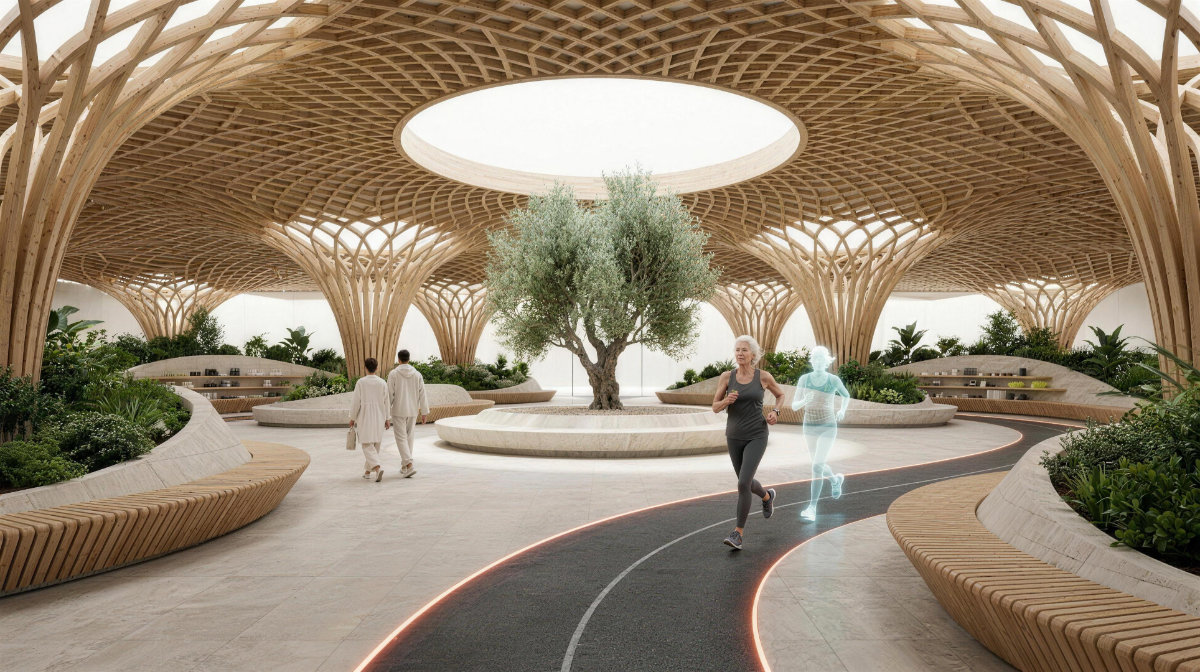
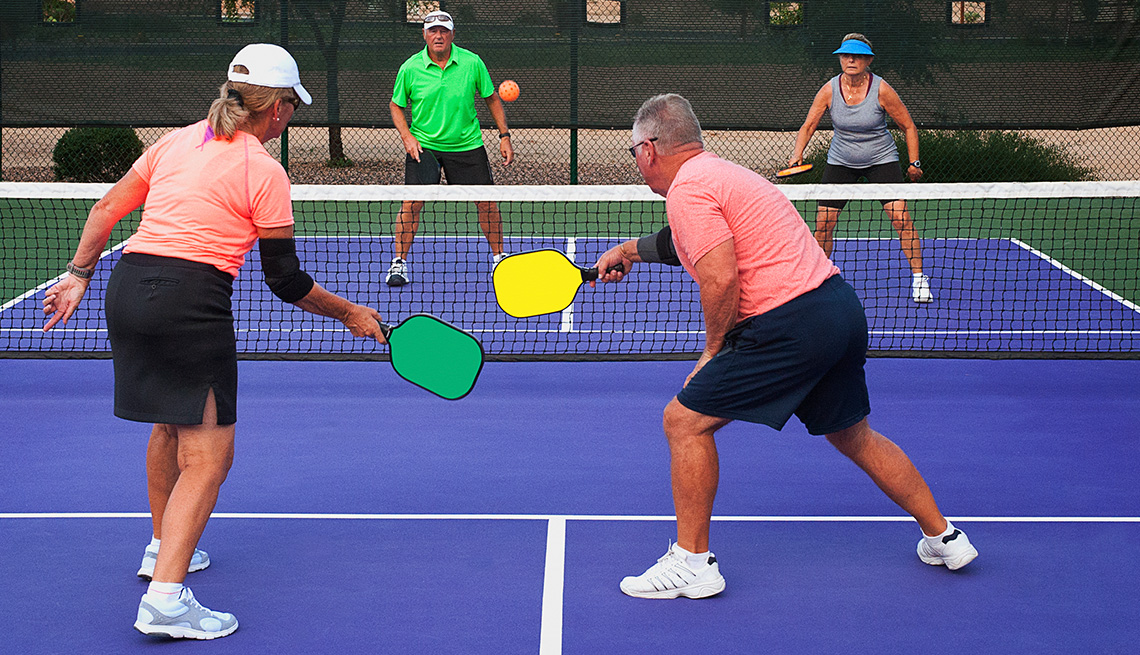
  • BOLD SPORTAdaptive performance wear designed for older consumers.
  • InfrastructureIntergenerational sport activities as organized play infrastructure.
  • Role modelsSenior competitive athletes as inspiring role models.
Intergenerational play infrastructure in a 2050 future Older competitive athlete in a future sport scenario
Life

Reframing decline

In 2026, later life is treated as a state of decline that happens to you, and that others must manage on your behalf. In 2050, you have agency over your care. Mobility keeps the world in reach so that independence lasts as long as you do.

What if we built for older people's needs through the lens of function and desirability?
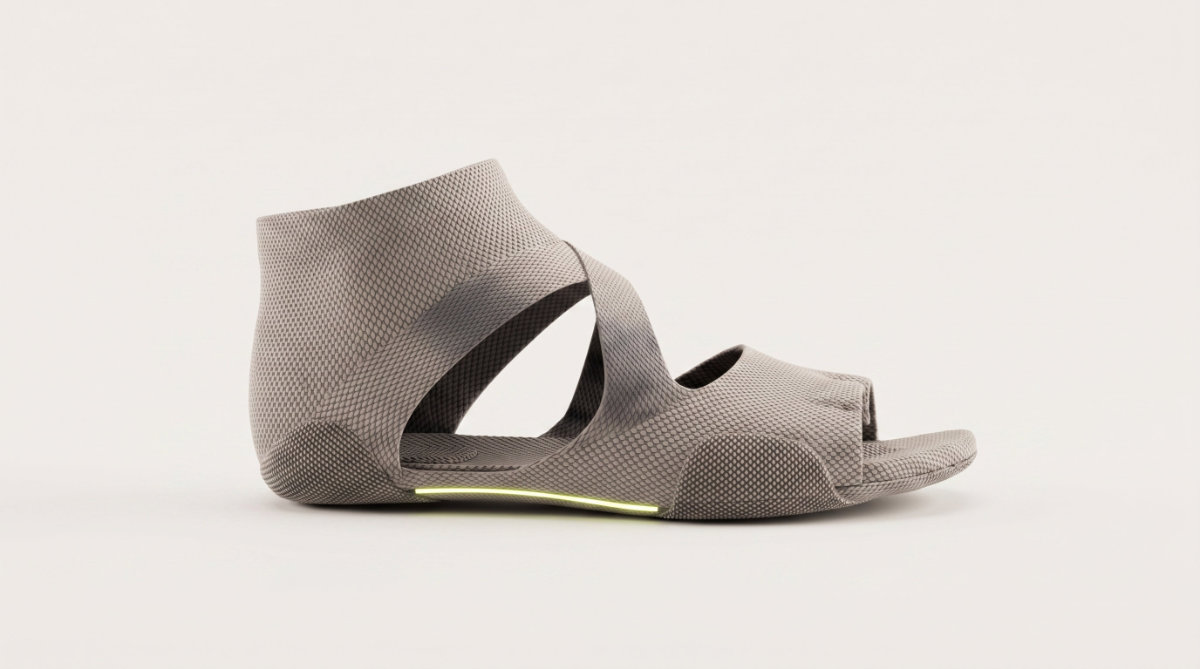
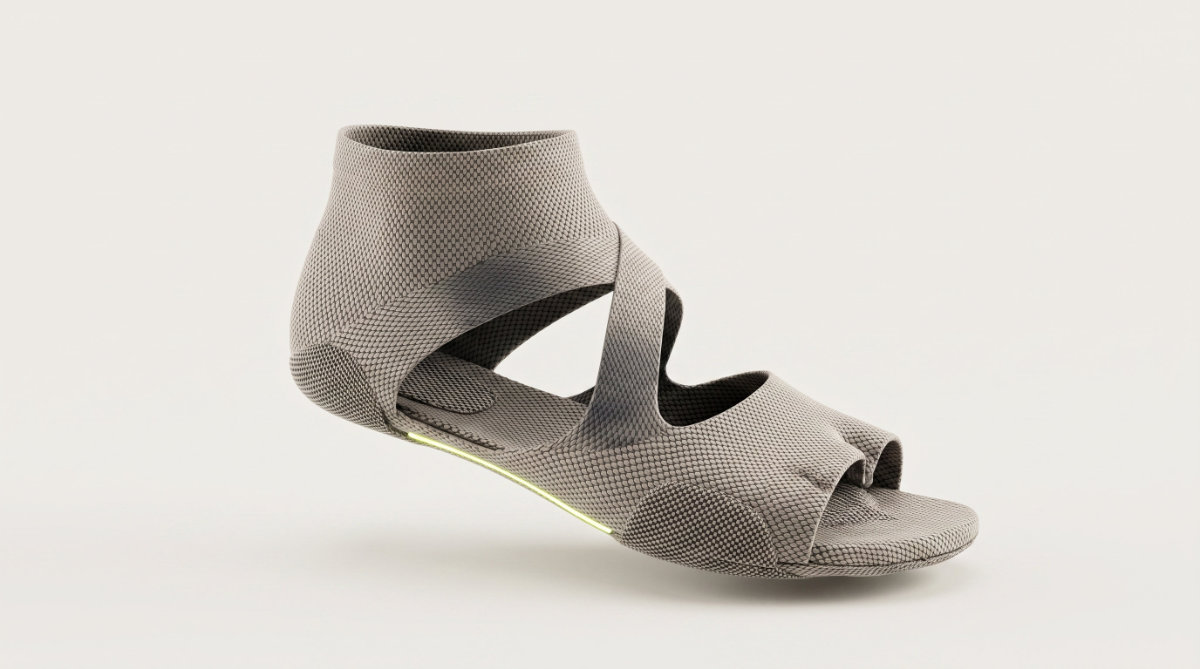
  • BOLD BALANCEPersonal mobility robotics system built in the form of a shoe and as an extension of the foot. The result: strength, stability, and balance from the ground up.
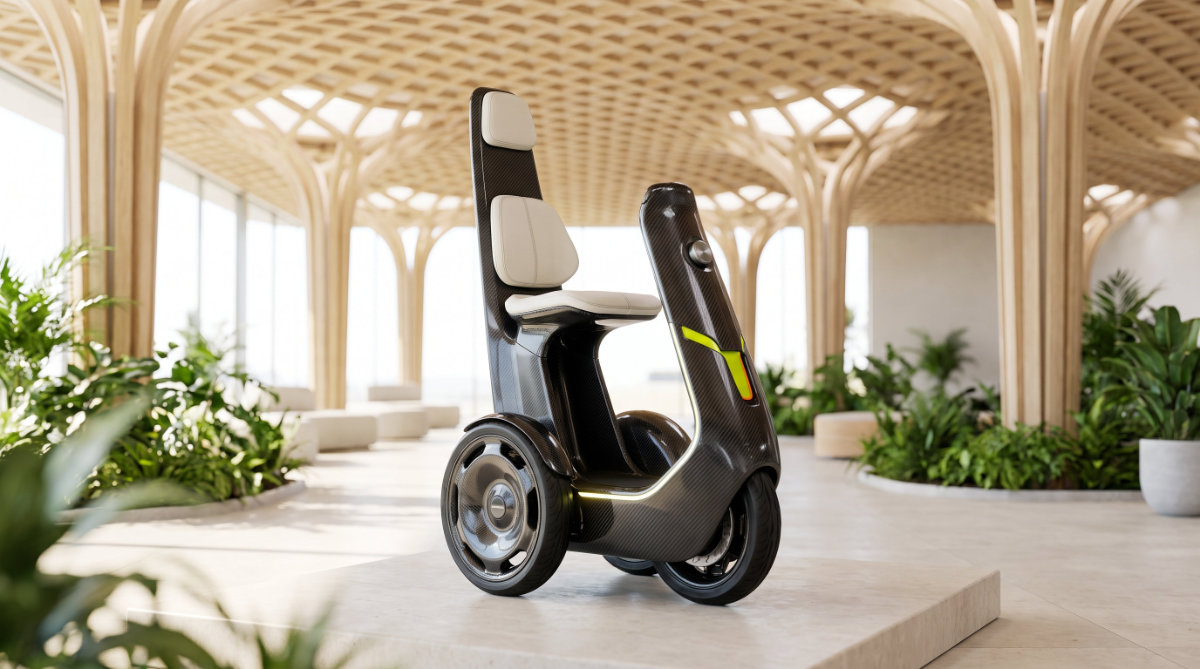
  • BOLD MOVEAutonomous personal mobility vehicle inspired by Italian scooters.
Adaptive BOLD Balance footwear concept Adaptive BOLD Balance footwear concept Adaptive BOLD Balance footwear concept BOLD Move autonomous mobility concept
Inside the World

Four conditions shape this 2050.

These are speculative conditions built on the analysis of current global political, legal, environmental, and economic macro trends. Together they make the future tangible enough to design around. While the conditions themselves aren't necessarily utopian, my preferable 2050 envisions a move towards equitable access of agency, opportunity, and adaptation measures.

2050 political driver visual
Driver 1 · Political
United confederation of independent city states

2026: The multilateral order weakens while cities continue functioning.

2050: Political dysfunction deadlocks governments; cities become the primary organizing unit.

2050 legal driver visual
Driver 2 · Legal
The universal right to age with protection

2024: The European Court of Human Rights ruled that Switzerland's climate inaction breached the rights of older people.

2050: Later life is a protected status with rights that must be upheld in courts.

2050 environmental driver visual
Driver 3 · Environmental
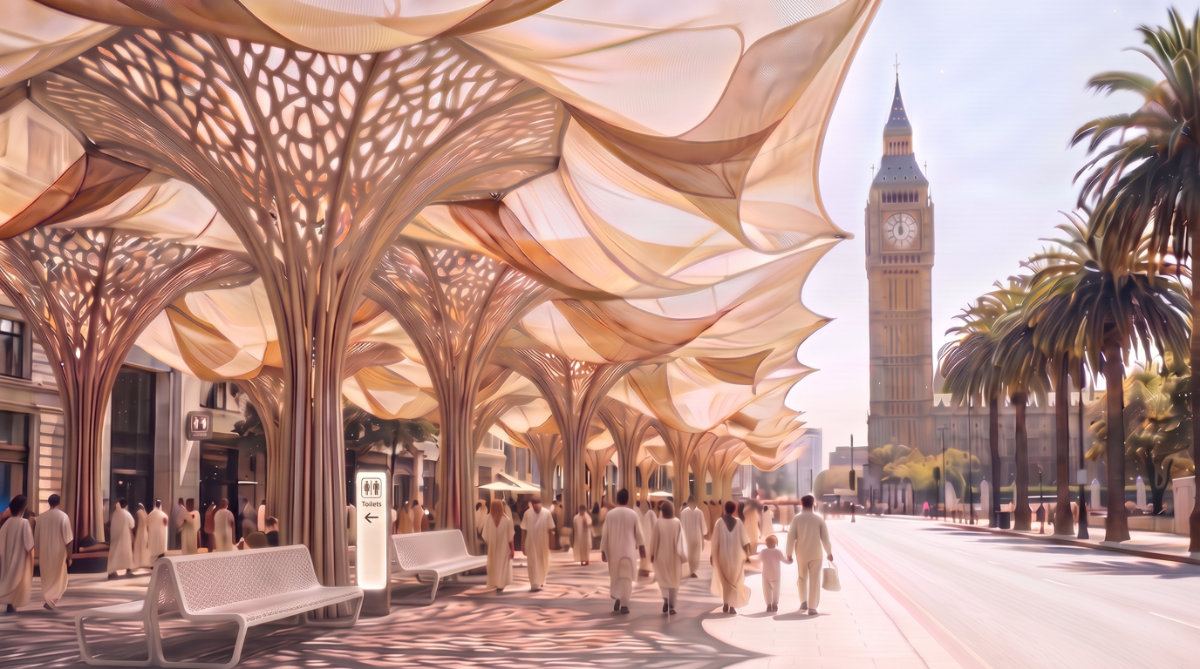
The 15-minute city + climate adaptation

2026: Record-breaking heat waves kill tens of thousands across Europe. People 65+ are disproportionately affected.

2050: Cities rebuild around age-inclusive infrastructure, including proximity to shade, toilets, and seating.

2050 economic driver visual
Driver 4 · Economic
Gross Prosperity Index + Civic Initiative Council

2026: Capital markets price short-term output and fail to price the things that sustain a society.

2050: Prosperity is measured through public-good metrics and new public-private funding mechanisms.

03 / Opportunity

Why does this future need to exist?

A large consumer opportunity is visible. The persistent challenge is turning what is known about older customers into products and experiences people want to choose.

02 / BEHAVIOR

People reject products that signal “old.”

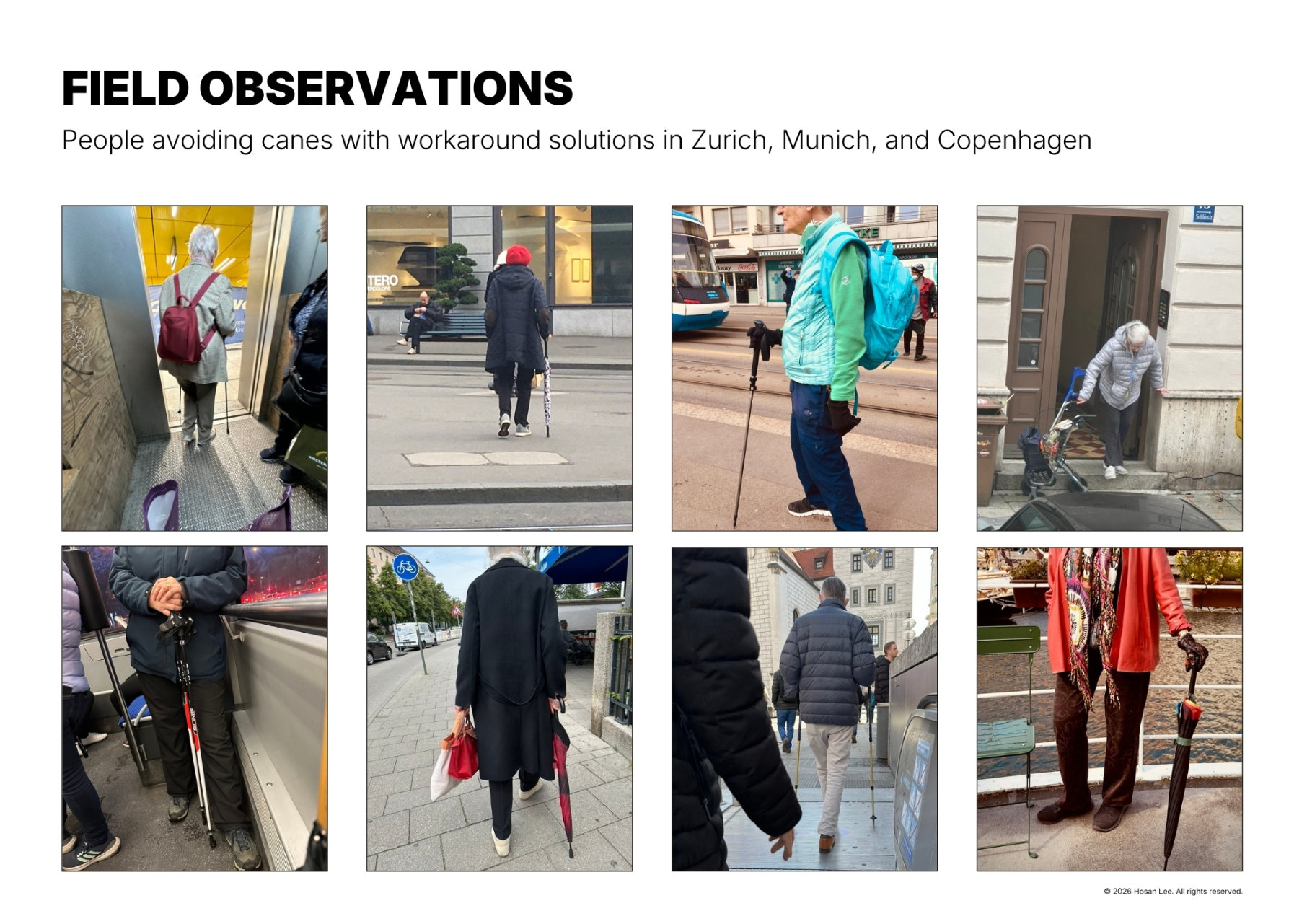
In a Hong Kong study, 56% of observed walking-aid users chose non-medical-looking options such as hiking poles, umbrellas, or unmarked sticks over clinical canes. The pattern is corroborated in the published record across assistive categories, and as observed by fieldwork in Switzerland, Germany, and Denmark.

03 / PERSISTENT DIAGNOSIS

The market has heard this before.

1993Design For Our Future Selves (Design Age)
2013Five Hours a Day: Systemic Innovation For An Ageing Population (Nesta)
2017The Longevity Economy (Joseph Coughlin, MIT AgeLab)

Across decades of work, the challenge remains translating knowledge into mainstream products, channels, and experiences.

04 / CUSTOMER EXPERIENCE

How might mainstream consumer markets become pro-aging?

Build around identity, aesthetics, function, and desire, then serve older customers through the channels and experiences they already use.

Understanding the System

Where can a venture intervene?

Four reinforcing loops – product stigma, cultural lock-in, underinvestment, and youth-first briefs – keep the failure in place. The map identifies four leverage points and a balancing response: customer substitution.

Open the interactive map ↗

LP3 · Highest leverage

Reframe the data

Connects product stigma, underinvestment, and customer substitution (R1, R3, B).

LP1

Rewrite the brief

Changes product definition and youth-first briefs (R1, R4).

LP4

Challenge the assumption

Reaches the cultural lock-in loop (R4).

LP2

Change the channel

Strengthens the customer-substitution response (B).

Understanding the current product landscape

Aging Market Diagnostic

Open the diagnostic tool ↗

Three alignment conditions
ProductDoes it work for its intended use?
CulturalCan people adopt it without an assigned aging identity?
BehavioralWhat do people actually do?
Six value-chain stages
Design developmentManufacturingDistributionMarketingRetailCustomer experience
Example Product Page
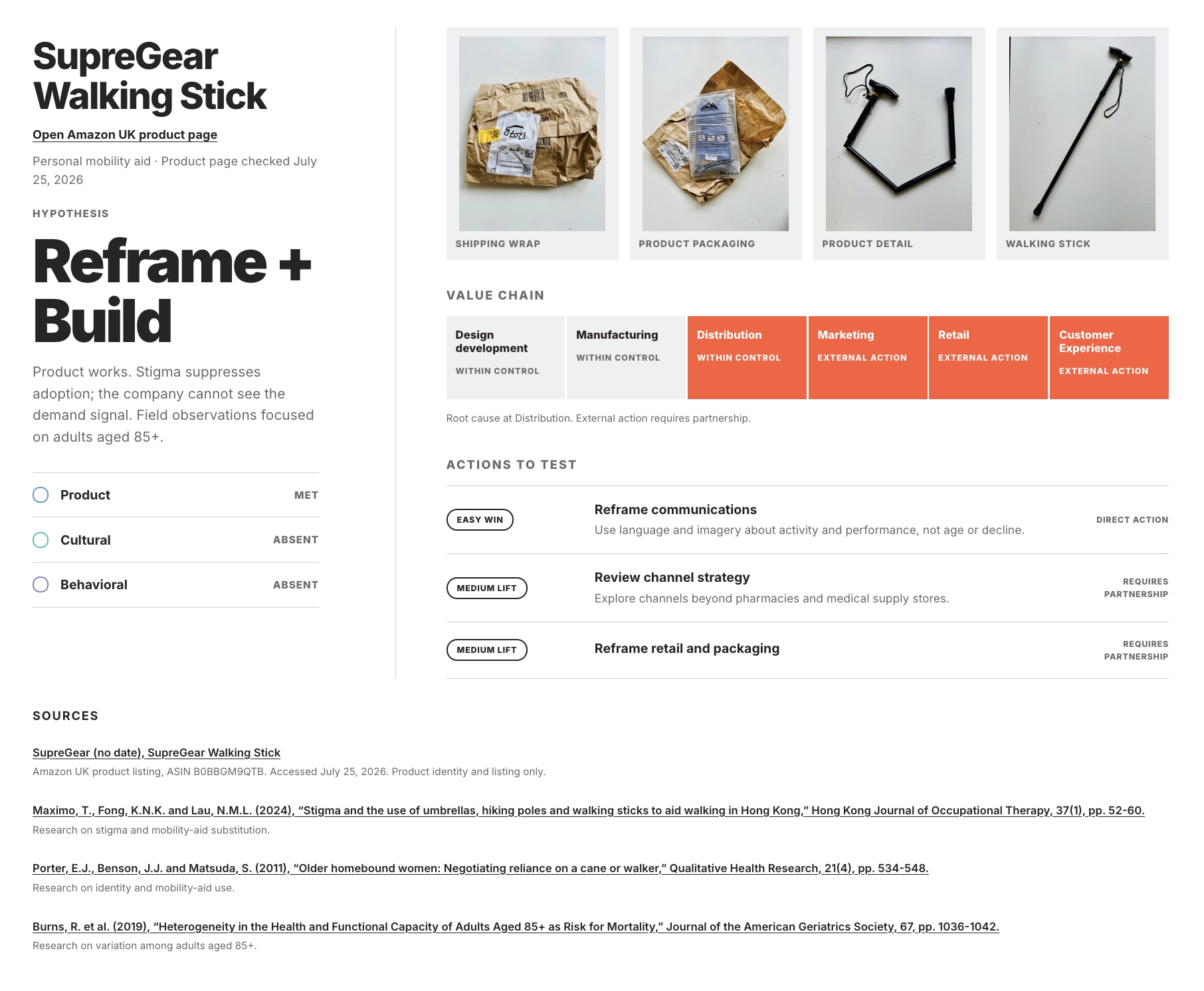
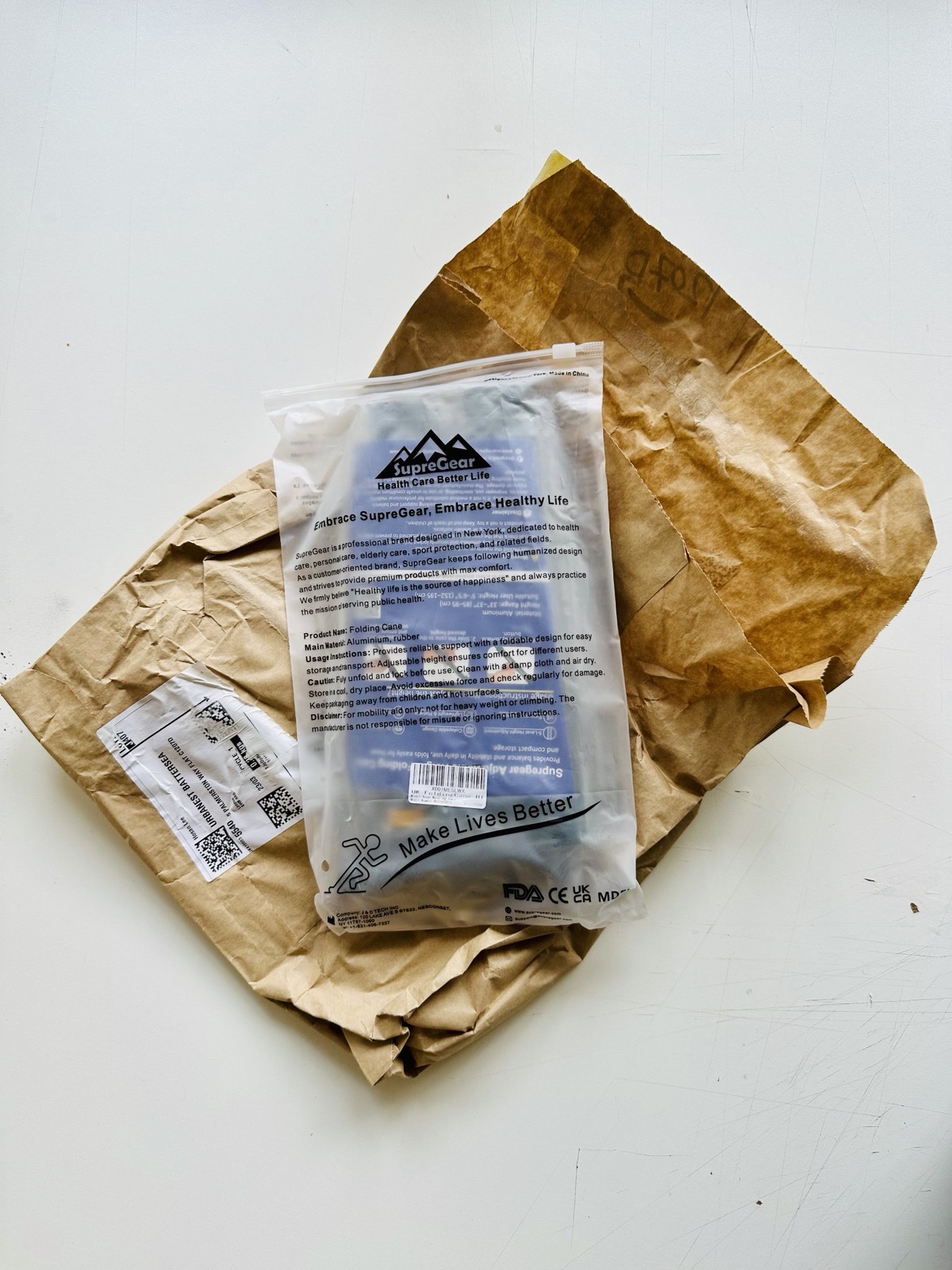
SupreGear Walking Stick

The AMD evaluates a specific product across product, cultural, and behavioral alignment, identifies the gap, and locates where it occurs in the value chain.

From preferable future to business possibility

A market problem identified. A future customer experience imagined. A system for finding intervention points developed.

04 / Supporting Research

The evidence behind the world.

Research supports the worldbuilding: it diagnoses what holds the current system in place, spots transitional signals, and informs a preferable future.

469
Research database pages
239
Products scored
56
Macro sources across six PESTLE strands
496
Micro signals across four 2050 domains
H1

Diagnostic

Existing in the dominant present

Find the persistent market failure and where the value chain is misaligned.

  • Literature & practice review
  • Product catalog database
  • Aging Market Diagnostic
H2

Signal scan

Looking for transitional spaces

Find the workarounds and behaviors that point toward alternative ways of serving later life.

  • Macro foresight
  • Micro signals
  • Comparative value-chain synthesis
H3

Speculative

Constructing a preferable 2050

Make a tangible future that stakeholders can coordinate around.

  • Speculative worldbuilding
  • Autoethnography
  • Strategic backcasting
From signal to scenario

How research becomes a design opportunity.

Signal

Non-medical mobility

Users choose hiking poles, umbrellas and unmarked sticks over clinical canes.

Pattern

Lifestyle framing

The same functional need can be experienced differently depending on identity and context.

Future possibility

Function + desirability

Design can support aging needs without asking users to adopt an “old” identity.

Output

BOLD

A consumer ecosystem that reframes mobility, home, work and play around agency.

Systems mappingMaps the reinforcing loops and intervention points that connect a market failure to places where change can begin.
Aging Market DiagnosticThe framework and interactive product tool locate alignment gaps along the value chain.
Product catalog239 mobility, accessibility and lifestyle products scored through the Aging Market Diagnostic.
Self-directed researchObservational fieldwork and qualitative interviews with older adults and caregivers in the United States, Switzerland and Germany, alongside literature review and signal scanning.
05 / Sources

Go deeper.

Every source cited in the final submitted thesis, including the four speculative 2050 drivers, the H3 domain sources, and legislation and cases. Sources in bold indicate particular significance to the project.

Browse the full bibliography
  • AARP (2024) 2024 home and community preferences among adults 18 and older. Washington, DC: AARP Research. Available at: https://doi.org/10.26419/res.00831.001 (Accessed: 25 July 2026).
  • AARP (2026) The longevity economy outlook 2026. Washington, DC: AARP Thought Leadership. Available at: https://www.aarp.org/pri/topics/work-finances-retirement/economics-aging/longevity-economy-outlook/ (Accessed: 26 July 2026).
  • Age UK London (2022) Public toilets in London: the views of older Londoners. London: Age UK London. Available at: https://www.ageuk.org.uk/bp-assets/globalassets/london/campaigns/out-and-about/ageuk_london_loos_final.pdf (Accessed: 26 July 2026).
  • American Pet Products Association (2026) 2026 state of the industry report. Stamford, CT: American Pet Products Association. Available at: https://americanpetproducts.org/2026-state-of-the-industry (Accessed: 8 July 2026).
  • Apple Inc. (2024) Apple introduces AirPods 4 and a hearing health experience with AirPods Pro 2. Available at: https://www.apple.com/newsroom/2024/09/apple-introduces-airpods-4-and-a-hearing-health-experience-with-airpods-pro-2/ (Accessed: 8 July 2026).
  • Arup (2019) Cities alive: designing for ageing communities. London: Arup. Available at: https://www.arup.com/perspectives/publications/research/section/cities-alive-designing-for-ageing-communities (Accessed: 8 July 2026).
  • Bastin, J.-F., Clark, E., Elliott, T., Hart, S., van den Hoogen, J., Hordijk, I., Ma, H., Majumder, S., Manoli, G., Maschler, J., Mo, L., Routh, D., Yu, K., Zohner, C.M. and Crowther, T.W. (2019) ‘Understanding climate change from a global analysis of city analogues’, PLoS ONE, 14(7), e0217592. doi: 10.1371/journal.pone.0217592.
  • Bichard, J. and Ramster, G. (2025) Designing inclusive public toilets: Wee the People. London: Bloomsbury.
  • Bishop, P., Hines, A. and Collins, T. (2007) ‘The current state of scenario development: an overview of techniques’, Foresight, 9(1), pp. 5-25. doi: 10.1108/14636680710727516.
  • Bradley, S. (2021) ‘How do you solve a problem like… ageism in the marketing business?’, The Drum, 1 June. Available at: https://www.thedrum.com/news/how-do-you-solve-problem-ageism-the-marketing-business (Accessed: 8 July 2026).
  • Brown, S.L. and Vaughan, C.C. (2009) Play: how it shapes the brain, opens the imagination, and invigorates the soul. New York: Avery.
  • Bünger, M., Tham, C.M., Mojsiejuk, M. and Sherer, A. (eds) (2023) inTENSE: Issue 3_2043 – Silverization is Civilization. Barcelona: Futurity Systems. Available at: https://issuu.com/futuritysystems/docs/intense3_silverization_is_civilization (Accessed: 8 July 2026).
  • C40 Cities (2026) About C40. Available at: https://www.c40.org/about-c40/ (Accessed: 15 July 2026).
  • Carrigan, M. and Szmigin, I. (2000a) ‘Advertising and older consumers: image and ageism’, Business Ethics: A European Review, 9(1), pp. 42-50. doi: 10.1111/1467-8608.00168.
  • Carrigan, M. and Szmigin, I. (2000b) ‘Advertising in an ageing society’, Ageing and Society, 20(2), pp. 217-233. doi: 10.1017/S0144686X99007709.
  • Centre for Ageing Better (2021) Age-positive image library. London: Centre for Ageing Better. Available at: https://ageing-better.org.uk/news/age-positive-image-library-launched (Accessed: 26 July 2026).
  • Centre for Strategic Futures (2024) Foresight 2024: 15th anniversary issue. Singapore: Centre for Strategic Futures, Prime Minister’s Office. Available at: https://file.go.gov.sg/csfforesight2024.pdf (Accessed: 8 July 2026).
  • Chen, Y., Ren, J., Zhang, M., Rajapakse, D., Liu, F., Lee, B.W., Won, S.M. and Zhu, X. (2026) ‘Smart textile wearables for human-environment interaction’, Chemical Engineering Journal, 541, 177140. doi: 10.1016/j.cej.2026.177140.
  • Christensen, C.M., Hall, T., Dillon, K. and Duncan, D.S. (2016) Competing against luck: the story of innovation and customer choice. New York: HarperBusiness.
  • Coleman, R. (ed.) (1993) Designing for our future selves. London: Royal College of Art.
  • Cooper Hewitt, Smithsonian Design Museum (no date) Good Grips prototype for a peeler. Available at: https://collection.cooperhewitt.org/objects/18790837/ (Accessed: 26 July 2026).
  • Copenhagen Institute for Futures Studies (2022) Global megatrends. Scenario report. Copenhagen: Copenhagen Institute for Futures Studies. Available at: https://www.cifs.dk/read-listen/reports-knowledge/15-global-megatrends (Accessed: 8 July 2026).
  • Cork, S. et al. (2023) ‘Exploring alternative futures in the Anthropocene’, Annual Review of Environment and Resources, 48(1), pp. 25-54. doi: 10.1146/annurev-environ-112321-095011.
  • Coughlin, J.F. (2017) The longevity economy: inside the world’s fastest-growing, most misunderstood market. New York: PublicAffairs.
  • Czaja, S.J., Boot, W.R., Charness, N. and Rogers, W.A. (2019) Designing for older adults: principles and creative human factors approaches. 3rd edn. Boca Raton, FL: CRC Press.
  • Darveau, J., Paquet, C., Faber, A. and Champagne Saint-Arnaud, V. (2026) ‘A scoping review on ageism in marketing: towards age inclusiveness’, Journal of Marketing Management, 42(7-8), pp. 958-989. doi: 10.1080/0267257X.2025.2562327.
  • Dickson, C. (2023) Design Age Ideas, No. 1-4. London: Design Age Institute, Royal College of Art.
  • Dike, C. (1994) Canes in the United States: illustrated mementoes of American history 1607-1953. Ladue, MO: Cane Curiosa Press.
  • Dong, H., Clarkson, P.J., Ahmed, S. and Keates, S. (2004) ‘Investigating perceptions of manufacturers and retailers to inclusive design’, The Design Journal, 7(3), pp. 3-15. doi: 10.2752/146069204789338398.
  • Dong, H., McGinley, C., Nickpour, F. and Cifter, A.S. (2015) ‘Designing for designers: insights into the knowledge users of inclusive design’, Applied Ergonomics, 46(Part B), pp. 284-291. doi: 10.1016/j.apergo.2013.03.003.
  • Dopfer, K., Foster, J. and Potts, J. (2004) ‘Micro-meso-macro’, Journal of Evolutionary Economics, 14(3), pp. 263-279. doi: 10.1007/s00191-004-0193-0.
  • Drolet, A. and Yoon, C. (eds) (2020) The aging consumer: perspectives from psychology and marketing. 2nd edn. New York: Routledge. doi: 10.4324/9780429343780.
  • Dunne, A. and Raby, F. (2013) Speculative everything: design, fiction, and social dreaming. Cambridge, MA: MIT Press.
  • Dychtwald, K. (2021) ‘Ageism is alive and well in advertising’, Global Coalition on Aging, 8 September. Available at: https://globalcoalitiononaging.com/2021/09/08/ageism-is-alive-and-well-in-advertising/ (Accessed: 8 July 2026).
  • European Commission (2018) The silver economy: final report. Luxembourg: Publications Office of the European Union. doi: 10.2759/685036.
  • Fang, Y., Harshe, K., Franz, J.R. and Lerner, Z.F. (2022) ‘Feasibility evaluation of a dual-mode ankle exoskeleton to assist and restore community ambulation in older adults’, Wearable Technologies, 3, e13. doi: 10.1017/wtc.2022.12.
  • Finer, J.T., Simmons, R.M. and Spudich, J.A. (1994) ‘Single myosin molecule mechanics: piconewton forces and nanometre steps’, Nature, 368, pp. 113-119. doi: 10.1038/368113a0.
  • Geels, F.W. (2002) ‘Technological transitions as evolutionary reconfiguration processes: a multi-level perspective and a case-study’, Research Policy, 31(8-9), pp. 1257-1274. doi: 10.1016/S0048-7333(02)00062-8.
  • Goodman, J., Dong, H., Langdon, P.M. and Clarkson, P.J. (2006) ‘Increasing the uptake of inclusive design in industry’, Gerontechnology, 5(3), pp. 140-149. doi: 10.4017/gt.2006.05.03.003.00.
  • Government Office for Science (2016) Future of an ageing population. London: Foresight, Government Office for Science. Available at: https://www.gov.uk/government/publications/future-of-an-ageing-population (Accessed: 8 July 2026).
  • Hartt, M. (2023) ‘Expanding the playful city: planning for older adult play’, Cities, 143, 104578. doi: 10.1016/j.cities.2023.104578.
  • Hettich, D., Hattula, S. and Bornemann, T. (2018) ‘Consumer decision-making of older people: a 45-year review’, The Gerontologist, 58(6), pp. e349-e368. doi: 10.1093/geront/gnx007.
  • Human Rights Watch (2025) Punished for getting older: South Korea’s age-based policies and older workers’ rights. New York: Human Rights Watch. Available at: https://www.hrw.org/report/2025/07/08/punished-for-getting-older/south-koreas-age-based-policies-and-older-workers (Accessed: 8 July 2026).
  • IMARC Group (2025) Elderly and disabled assistive devices market report 2025-2033. IMARC Group. Available at: https://www.imarcgroup.com/elderly-disabled-assistive-devices-market (Accessed: 8 July 2026).
  • Institute of Practitioners in Advertising (2024) Agency census 2023. London: IPA. Available at: https://ipa.co.uk/knowledge/publications-reports/agency-census-2023 (Accessed: 8 July 2026).
  • International Monetary Fund (2025) World economic outlook, April 2025: a critical juncture amid policy shifts. Washington, DC: IMF. Chapter 2, ‘The rise of the silver economy: global implications of population aging’. Available at: https://www.imf.org/en/publications/weo/issues/2025/04/22/world-economic-outlook-april-2025 (Accessed: 8 July 2026).
  • Johar, I. and Lorenz, M. (2026) The end of baseline innovation. London: Dark Matter Labs.
  • Karita, S., Isogai, T., Bakos, C. and Chin, V. (2025) Countries with aging populations can thrive. Here’s how. Boston: BCG Henderson Institute. Available at: https://www.bcg.com/publications/2025/how-countries-aging-populations-can-thrive (Accessed: 8 July 2026).
  • Khan, H. (2013) Five hours a day: systemic innovation for an ageing population. London: Nesta. Available at: https://www.nesta.org.uk/report/five-hours-a-day/ (Accessed: 8 July 2026).
  • Kwan, A.S.T., Teo, K.W., Sayampanathan, A.A., Foo, C.D., Lim, K.S., Lee, C.E. and Low, L.L. (2025) ‘Community care at scale: Singapore’s Active Ageing Centres 2.0 as a model for healthy ageing’, Annals of the Academy of Medicine, Singapore, 54(12), pp. 779-785. doi: 10.47102/annals-acadmedsg.2025239.
  • Laslett, P. (1989) A fresh map of life: the emergence of the third age. London: Weidenfeld and Nicolson.
  • Levy, B.R. and Slade, M.D. (2026) ‘Aging redefined: cognitive and physical improvement with positive age beliefs’, Geriatrics, 11(2), 28. doi: 10.3390/geriatrics11020028.
  • Levy, B.R., Slade, M.D., Kunkel, S.R. and Kasl, S.V. (2002) ‘Longevity increased by positive self-perceptions of aging’, Journal of Personality and Social Psychology, 83(2), pp. 261-270. doi: 10.1037/0022-3514.83.2.261.
  • Li, S., Batra, R., Rus, D. and Lipson, H. (2019) ‘Particle robotics based on statistical mechanics of loosely coupled components’, Nature, 567(7748), pp. 361-365. doi: 10.1038/s41586-019-1022-9.
  • Linstone, H.A. (1984) Multiple perspectives for decision making: bridging the gap between analysis and action. New York: North-Holland.
  • Maximo, T., Fong, K.N.K. and Lau, N.M.L. (2024) ‘Stigma and the use of umbrellas, hiking poles and walking sticks to aid walking in Hong Kong’, Hong Kong Journal of Occupational Therapy, 37(1), pp. 52-60. doi: 10.1177/15691861241254862.
  • McClain, C. and Bishop, W. (2026) What we know about internet use, smartphone ownership and digital divides in the U.S. Washington, DC: Pew Research Center, 8 January. Available at: https://www.pewresearch.org/short-reads/2026/01/08/internet-use-smartphone-ownership-digital-divides-in-u-s/ (Accessed: 8 July 2026).
  • McCormack, A. and Fortnum, H. (2013) ‘Why do people fitted with hearing aids not wear them?’, International Journal of Audiology, 52(5), pp. 360-368. doi: 10.3109/14992027.2013.769066.
  • Meadows, D.H. (1999) Leverage points: places to intervene in a system. Hartland, VT: The Sustainability Institute. Available at: https://donellameadows.org/archives/leverage-points-places-to-intervene-in-a-system/ (Accessed: 8 July 2026).
  • Ministry of Manpower (2025) Retirement. Available at: https://www.mom.gov.sg/employment-practices/retirement (Accessed: 8 July 2026).
  • Moreno, C. (2024) The 15-minute city: a solution to saving our time and our planet. Hoboken, NJ: Wiley.
  • Mortensen, J.K. and Persson, J. (2025) The Nordic Charter for Women’s Health 2040. Copenhagen: Copenhagen Institute for Futures Studies / Nordic Women’s Health Hub. Available at: https://www.cifs.dk/cases-stories/the-nordic-charter-for-womens-health-2040 (Accessed: 8 July 2026).
  • Moss, A. (2021) A visual history of walking sticks and canes. Lanham, MD: Rowman & Littlefield.
  • Myerson, J. (2017) New old: designing for our future selves. London: The Design Museum.
  • National Intelligence Council (2021) Global trends 2040: a more contested world (NIC 2021-02339). Washington, DC: Office of the Director of National Intelligence. Available at: https://www.dni.gov/index.php/gt2040-home (Accessed: 8 July 2026).
  • Neugarten, B.L. (1974) ‘Age groups in American society and the rise of the young-old’, The Annals of the American Academy of Political and Social Science, 415(1), pp. 187-198. doi: 10.1177/000271627441500114.
  • Nordlund, G. (2012) ‘Time-scales in futures research’, Futures, 44(4), pp. 408-414.
  • OECD (2024) Society at a glance 2024: OECD social indicators. Paris: OECD Publishing. Available at: https://doi.org/10.1787/918d8db3-en (Accessed: 8 July 2026).
  • OECD (2025) Pensions at a glance 2025: OECD and G20 indicators. Paris: OECD Publishing. Available at: https://doi.org/10.1787/e40274c1-en (Accessed: 8 July 2026).
  • Peng, F. and Neville, S. (2025) ‘Designing intergenerational play space: a scoping review’, Design for Health. doi: 10.1080/24735132.2025.2506852.
  • Perkmann, M., Tartari, V., McKelvey, M., Autio, E., Broström, A., D’Este, P., Fini, R., Geuna, A., Grimaldi, R., Hughes, A., Krabel, S., Kitson, M., Llerena, P., Lissoni, F., Salter, A. and Sobrero, M. (2013) ‘Academic engagement and commercialisation: a review of the literature on university-industry relations’, Research Policy, 42(2), pp. 423-442. doi: 10.1016/j.respol.2012.09.007.
  • Persson, J., Gemzell-Danielsson, K. and Krivonos, D. (2026) ‘The Nordic Charter for Women’s Health 2040: vision-led architecture for women’s health’, The Lancet Obstetrics, Gynaecology, & Women’s Health, 2(3), pp. e183-e184. doi: 10.1016/S3050-5038(26)00014-2.
  • Phillips, B. and Zhao, H. (1993) ‘Predictors of assistive technology abandonment’, Assistive Technology, 5(1), pp. 36-45. doi: 10.1080/10400435.1993.10132205.
  • Politico (2026) ‘Brutal June heat wave killed as many as 14,000 Europeans’, Politico. Available at: https://www.eenews.net/articles/brutal-june-heat-wave-killed-as-many-as-14000-europeans/ (Accessed: 25 July 2026).
  • Porter, E.J., Benson, J.J. and Matsuda, S. (2011) ‘Older homebound women: negotiating reliance on a cane or walker’, Qualitative Health Research, 21(4), pp. 534-548. doi: 10.1177/1049732310385822.
  • Porter, M.E. (1985) Competitive advantage: creating and sustaining superior performance. New York: Free Press.
  • Priplata, A.A., Niemi, J.B., Harry, J.D., Lipsitz, L.A. and Collins, J.J. (2003) ‘Vibrating insoles and balance control in elderly people’, The Lancet, 362(9390), pp. 1123-1124. doi: 10.1016/S0140-6736(03)14470-4.
  • Raworth, K. (2017) Doughnut economics: seven ways to think like a 21st-century economist. London: Random House Business Books.
  • Romanello, M. et al. (2024) ‘The 2024 report of the Lancet Countdown on health and climate change: facing record-breaking threats from delayed action’, The Lancet, 404(10465), pp. 1847-1896. doi: 10.1016/S0140-6736(24)01822-1.
  • Sharpe, B. (2013) Three horizons: the patterning of hope. Axminster: Triarchy Press.
  • Simpson, D. (2015) Young-old: urban utopias of an aging society. Zürich: Lars Müller Publishers.
  • Sports and Fitness Industry Association (2025) 2025 topline participation report. Silver Spring, MD: Sports and Fitness Industry Association.
  • Star, S.L. and Griesemer, J.R. (1989) ‘Institutional ecology, “translations” and boundary objects: amateurs and professionals in Berkeley’s Museum of Vertebrate Zoology, 1907-39’, Social Studies of Science, 19(3), pp. 387-420. doi: 10.1177/030631289019003001.
  • Stokke, R. (2016) ‘The personal emergency response system as a technology innovation in primary health care services: an integrative review’, Journal of Medical Internet Research, 18(7), e187. doi: 10.2196/jmir.5727.
  • supregear (no date) supregear Walking Stick. Available at: https://www.amazon.co.uk/dp/B0BBGM9QTB (Accessed: 25 July 2026).
  • Szmigin, I. and Carrigan, M. (2001) ‘Learning to love the older consumer’, Journal of Consumer Behaviour, 1(1), pp. 22-34. doi: 10.1002/cb.51.
  • Tham, C. and Bünger, M. (2026) How to synthesize the future: build better futures faster in four steps. Barcelona: Futurity Systems.
  • Tham, C., Bünger, M., Mojsiejuk, M. and Sherer, J. (2024) Coming of Age 20/40. Barcelona: Futurity Systems for the European Commission EU Policy Lab. Available at: https://futurity.science/data-stories/adulthood (Accessed: 8 July 2026).
  • The Business of Fashion and McKinsey & Company (2024) ‘Silver spenders’, in The state of fashion 2025: challenges at every turn. McKinsey & Company. Available at: https://www.mckinsey.com/industries/retail/our-insights/state-of-fashion-2025 (Accessed: 8 July 2026).
  • Trinny London (no date) Our story. Available at: https://trinnylondon.com/us/our-story (Accessed: 26 July 2026).
  • United Nations Department of Economic and Social Affairs, Population Division (2024) World population prospects 2024: summary of results (UN DESA/POP/2024/TR/NO. 9). New York: United Nations. doi: 10.18356/9789211065138.
  • United Nations Development Programme (2022) System change: a guidebook for adopting portfolio approaches. Bangkok: UNDP Regional Bureau for Asia and the Pacific. Available at: https://www.undp.org/publications/system-change-guidebook-adopting-portfolio-approaches (Accessed: 8 July 2026).
  • Verein KlimaSeniorinnen Schweiz and Others v. Switzerland (2024) European Court of Human Rights, Grand Chamber, Application no. 53600/20, judgment of 9 April 2024.
  • Wang, Y., Li, L., Hofmann, D., Andrade, J.E. and Daraio, C. (2021) ‘Structured fabrics with tunable mechanical properties’, Nature, 596(7871), pp. 238-243. doi: 10.1038/s41586-021-03698-7.
  • Warren, C., Batra, R., Loureiro, S.M.C. and Bagozzi, R.P. (2019) ‘Brand coolness’, Journal of Marketing, 83(5), pp. 36-56. doi: 10.1177/0022242919857698.
  • Wellbeing Economy Alliance (2020) Measuring the wellbeing economy: how to move beyond GDP. Available at: https://weall.org/measuring-the-wellbeing-economy-how-to-move-beyond-gdp (Accessed: 15 July 2026).
  • WOHA (2017) Kampung Admiralty [architectural project]. Singapore: WOHA Architects. Available at: https://woha.net/project/kampung-admiralty/ (Accessed: 8 July 2026).
  • Woodyer, T. (2012) ‘Ludic geographies: not merely child’s play’, Geography Compass, 6(6), pp. 313-326. doi: 10.1111/j.1749-8198.2012.00477.x.
  • World Health Organization (2021) Global report on ageism. Geneva: World Health Organization. Available at: https://www.who.int/publications/i/item/9789240016866 (Accessed: 8 July 2026).
  • World Health Organization (2025) Ageing and health. Available at: https://www.who.int/news-room/fact-sheets/detail/ageing-and-health (Accessed: 8 July 2026).
  • World Health Organization and United Nations Children’s Fund (2022) Global report on assistive technology. Geneva: World Health Organization and the United Nations Children’s Fund (UNICEF). Available at: https://www.who.int/publications/i/item/9789240049451 (Accessed: 8 July 2026).
  • Zosh, J.M., Hopkins, E.J., Jensen, H., Liu, C., Neale, D., Hirsh-Pasek, K., Solis, S.L. and Whitebread, D. (2017) Learning through play: a review of the evidence. White paper. Billund: The LEGO Foundation. Available at: https://cms.learningthroughplay.com/media/wmtlmbe0/learning-through-play_web.pdf (Accessed: 8 July 2026).
  • Zurek, M.B. and Henrichs, T. (2007) ‘Linking scenarios across scales’, Technological Forecasting and Social Change, 74(8), pp. 1282-1295.
Research and worldbuilding are © 2026 Hosan Lee. Third-party material, where shown, remains attributed to its authors. The 2050 drivers and BOLD concepts are speculative worldbuilding outputs.